
Back-to-School Essentials: Know Your Child's IEP Rights
Your toolkit for advocating like a pro this school year

|
Welcome to The IEP Advantage!
As students head back to school, it’s time to ensure those IEPs move from paper to practice—and know exactly what to ask when they don’t.
What’s in this issue:
- 🎒 Your back-to-school legal rights checklist: IEP implementation, documentation, and protections
- 🤖 AI tools for IEP advocacy: what works, what’s risky, and why human verification is essential
- 📋 Critical questions to ask at IEP meetings—and how to demand data-backed answers
- 💰 When IEPs exist only on paper: funding gaps in Idaho and Connecticut reveal systemic failures
- ⚖️ Federal policy shifts and compensatory services: what parents need to watch
💡 Quote of the Day
“Parents shouldn’t accept vague answers. Ask targeted questions during IEP meetings to ensure children receive necessary services, and demand data supporting service decisions.”
— Dr. Desirie Skeete, Behavior Consultant and Mental Health Advocate
📰 Latest News
🔗 Back-to-School Legal Rights: What Parents Must Know About IEPs, Discipline, and Documentation (8 minute read)

As students return to classrooms, parents need to understand the legal protections that ensure their children receive appropriate education and support. Special education attorney Greg Rinckey emphasizes that IEPs and 504 plans require active parental advocacy throughout the school year—not just at annual meetings.
Key Points:
- Special education services require persistent advocacy to ensure schools provide adequate support as outlined in IEPs and 504 plans
- Students with disabilities have heightened due process protections in discipline cases that schools must follow
- Parents can access educational records within 3-7 days and should document all school communications in writing
- Schools must investigate all bullying incidents under New York’s Dignity for All Students Act, including off-campus cyberbullying
Why it matters: The beginning of the school year is when implementation gaps become apparent. Knowing your rights around IEP implementation, discipline protections, and documentation requirements gives you the foundation to advocate effectively from day one—before small problems become major violations.
🔗 What Questions Should Parents Ask at IEP Meetings? Expert Guidance on Demanding Data (4 minute read)
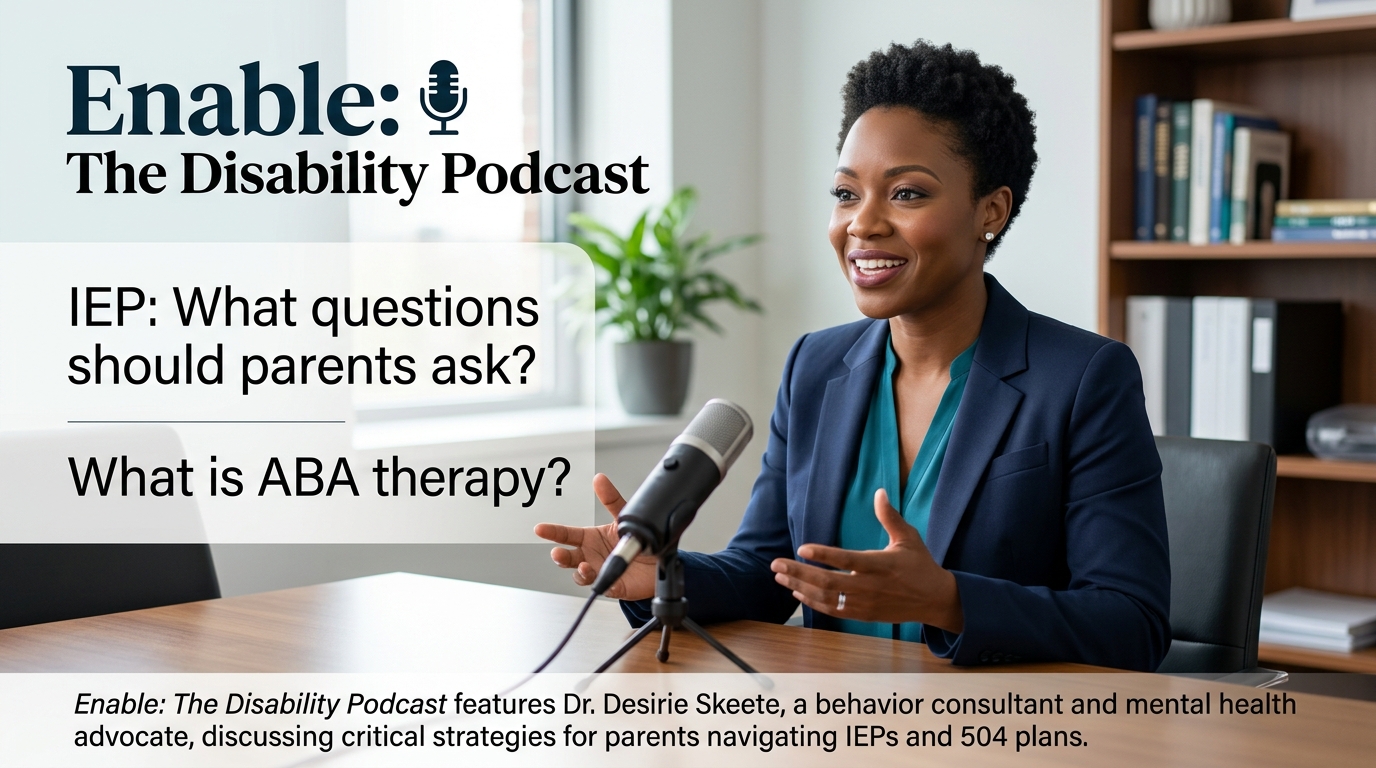
Dr. Desirie Skeete, founder of NESS Behavioral Consulting and behavior consultant, provides critical guidance for parents navigating IEP meetings. Her advice stems from personal experience advocating for her own child’s speech challenges and years of professional work supporting families.
Key Points:
- Parents should verify all listed services meet their child’s needs—including one-to-one support, ABA therapy, speech, and occupational therapy
- When schools deny services, parents must demand data-backed explanations rather than accepting vague responses
- Advocacy should extend beyond school services to include supports needed at home
- Asking targeted questions during IEP reviews ensures children receive the necessary services to make progress
Why it matters: Too many parents leave IEP meetings unsure whether their child’s plan is adequate or whether the school’s explanations hold up under scrutiny. Dr. Skeete’s approach gives you specific questions to ask and the confidence to push back when answers don’t include concrete data supporting the school’s decisions.
🔗 AI for IEP Advocacy: Opportunities, Risks, and Why Human Verification Is Essential (14 minute read)

The Center for Appropriate Dispute Resolution in Special Education has released a parents’ guide addressing the growing use of AI in special education advocacy. While AI tools empower families to better advocate for children with disabilities, they’re also creating significant challenges for dispute resolution systems.
Key Points:
- State agencies report increased complaints with hundreds of pages of AI-generated content, hallucinated case law, and inaccurate IDEA interpretations
- AI can helpfully define special education terms, generate questions for IEP meetings, and help parents prepare for meetings
- The guide warns that AI makes mistakes, contains bias, and exposes personal data when families input confidential information
- Human verification is essential—AI cannot determine what’s appropriate for a specific child’s situation
Why it matters: Parents are increasingly turning to AI tools like ChatGPT for IEP help, and while these tools can be powerful allies, they can also lead you astray with confident-sounding but legally incorrect information. Understanding what AI can safely help with—and where it fails—protects you from filing complaints based on hallucinated case law or pursuing strategies that don’t apply to your situation.
🔥 Trending
-
When IEPs Exist Only on Paper: Idaho’s $100 Million Funding Crisis: State investigation reveals IEPs aren’t being implemented due to insufficient resources, with only 20% of districts meeting legal requirements
-
Connecticut’s Special Education Funding Gap Reaches $96 Million: Budget caps create surpluses for rainy day funds while special education identification rises to 19% and services face cuts
-
Federal Outsourcing Threatens Special Education Oversight: Bipartisan bill seeks to block transfer of special education offices to other agencies, with advocates warning of lost expertise
-
Mukilteo Parent Fights for Flexible Compensatory Services: Case study in advocating for court-ordered remedial instruction during the school year rather than ineffective summer-only delivery
⚡ Quick Hits
🎯 Howard County’s Community-Driven Special Education Model
Howard County Public Schools is transforming special education through a Superintendent’s Special Education Advisory comprising administrators, staff, students, and parent organization representatives. The district recently unveiled a comprehensive Continuum of Special Education Services guide helping families understand placement options and IEP processes. (Read more)
🎯 Regional Special Education School Offers Alternative to Private Placement
Toms River Board of Education approved creation of a specialized regional school opening September 2027, offering comprehensive services including individualized academics, behavioral support, and vocational training. The public school alternative aims to provide quality education while reducing costs compared to private placements. (Read more)
🎯 Free Professional Development Strengthens Teacher-Paraeducator Collaboration
University of Nebraska at Kearney hosts a September 24 workshop on building effective partnerships between special education teachers and paraeducators. The training covers communication strategies, clearly defined roles, and consistent student support—elements parents should look for in their child’s IEP implementation. (Read more)
🎓 Industry Insight
When Your Child’s IEP Isn’t Being Implemented: What to Document and How to Respond
The Idaho investigation revealing IEPs that “exist on paper but aren’t implemented” isn’t unique to one state. Across the country, funding constraints, staffing shortages, and administrative challenges create gaps between what’s written in an IEP and what actually happens in the classroom.
Here’s what you need to know: an IEP is a legally binding document. Budget constraints don’t excuse non-implementation. When services aren’t delivered, your child is entitled to compensatory education—make-up services to remedy the harm caused by the violation.
Start documenting now. Keep a log of every service session (or missed session), every accommodation that should be in place, every modification that isn’t happening. Request progress reports in writing. When you communicate with the school about missing services, do it in writing and keep copies. This documentation becomes essential if you need to file a complaint or request compensatory services.
If you discover services aren’t being provided, start with a written request to the IEP team asking for an explanation and a plan to remedy the situation. If that doesn’t resolve the issue, you have options: mediation, state complaint, or due process. The Mukilteo case in Washington shows that persistence matters—and that parents can successfully advocate for flexible delivery of compensatory services that actually benefit their child rather than checking a box.
❓ Question of the Day
What’s your biggest challenge with IEP implementation this school year?
- A) Getting the school to provide services listed in the IEP
- B) Knowing what questions to ask at IEP meetings
- C) Documenting problems and communicating effectively with the school
- D) Understanding my legal rights and options when things go wrong
👋 Wrap Up
This back-to-school season brings both opportunity and challenges. While systemic funding gaps in states like Idaho and Connecticut reveal how budget constraints threaten IEP implementation, the tools and strategies in this issue give you concrete ways to advocate for your child—from asking the right questions at meetings to documenting services and understanding when AI can help (and when it can’t).
The federal policy landscape is shifting with proposed outsourcing of special education offices, making state-level advocacy and individual persistence more important than ever. Stay informed, document everything, and remember that an IEP is a legal commitment, not a suggestion that schools can ignore when resources are tight.
Keep advocating,
Tracie | The IEP Advantage Newsletter
Need More Than the News?
The IEP Advantage is here to help you turn information into action.
Explore practical IEP resources, parent education, helpful tools, curated products, and support designed to help families better understand and navigate special education.
Whether you’re preparing for an IEP meeting, looking for resources for your child, or simply trying to better understand the special education process, there’s more waiting for you at The IEP Advantage.
Be Informed. Be Empowered. Be Prepared.
📊 How did you like today’s email?
Enjoyed this issue?
Subscribe to get The IEP Advantage delivered to your inbox every week.
Join 8 other subscribers • Free forever